Project overview
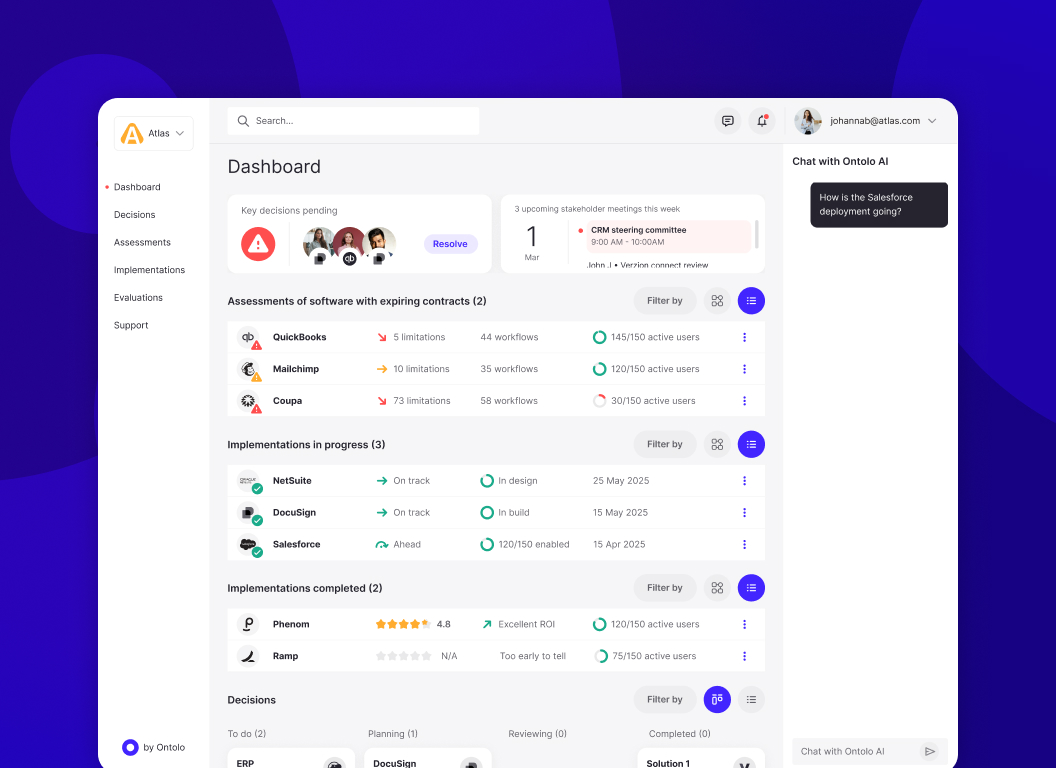
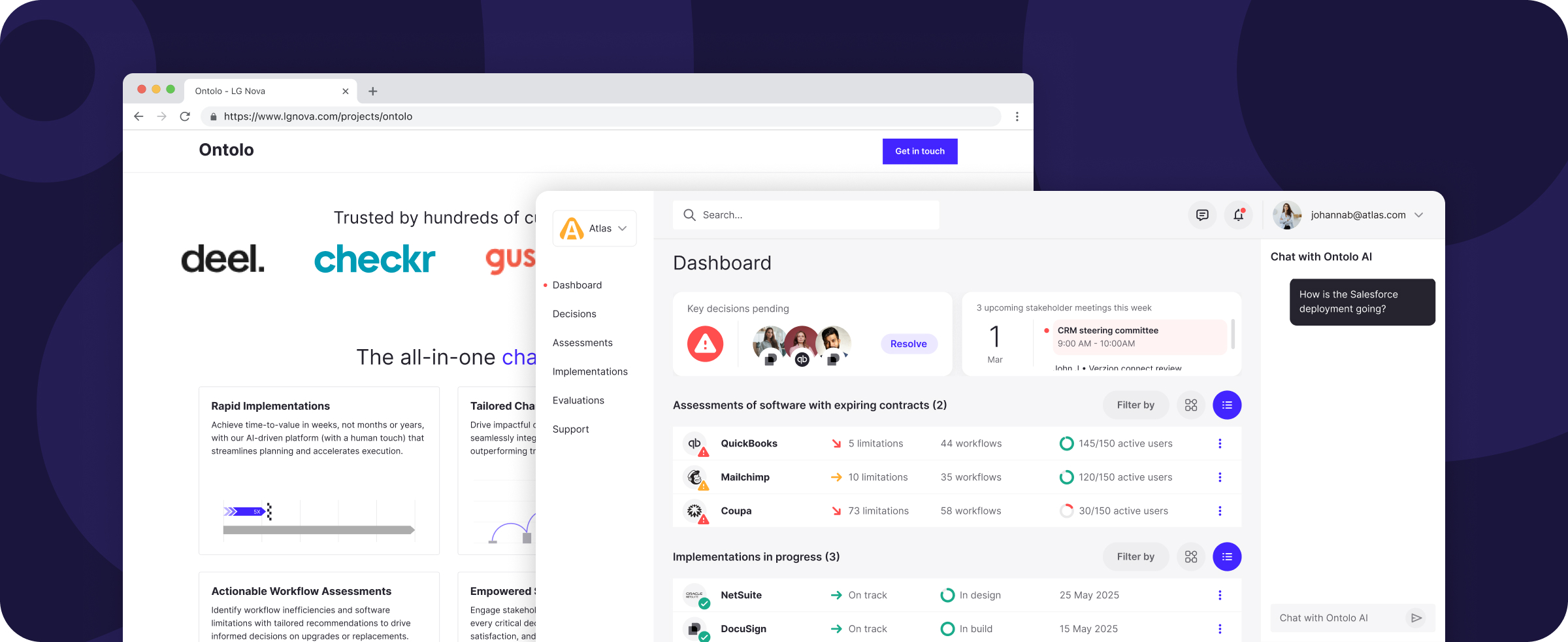
The project focused on web app UX & UI design for enterprise innovation, transforming highly manual, human-driven software decision processes into a structured, AI-supported experience. The goal was to reduce time-to-value, improve adoption, and support internal funding through a compelling proof of concept.
UX & Product Design
LG innovation, product, engineering
UX strategy, discovery facilitation, IA, interaction design, UI design, prototyping, illustration, design system foundations
Discovery, proof of concept, internal validation
Impact
Faster time-to-value
AI-supported analysis reduced delays in software selection and rollout.
Clearer decisions
Complex enterprise software choices were broken into step-by-step, outcome-driven flows.
Reduced manual effort
Previously human-heavy processes were streamlined through structured AI guidance.
Improved adoption focus
User feedback and desired outcomes were embedded directly into decision-making.
Enterprise-ready UX
Designed for executives, architects, and operational teams.
Investor-ready POC
An interactive prototype supported internal funding and innovation reviews.
Scalable foundation
The experience was built to support future expansion and deeper AI capability.
Clear value narrative
The platform clearly communicated how enterprises could maximise software ROI.
Mission
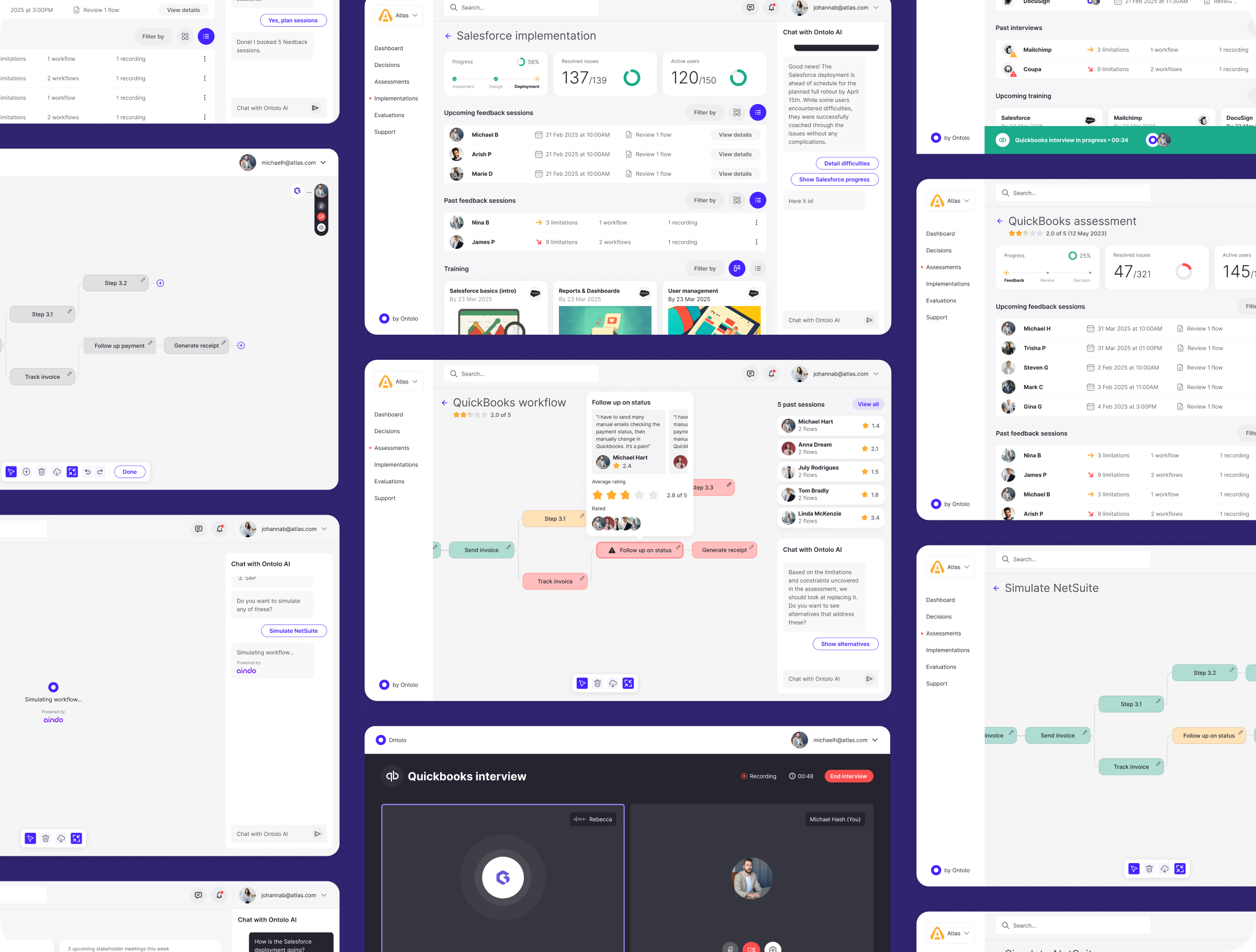
The mission was to design an AI-driven web app that helps enterprises make smarter software decisions faster. By combining user feedback, desired outcomes, and automated analysis, the experience aimed to remove friction from software assessment, planning, and rollout.
Key challenges
Managing interconnected systems, tools, and stakeholders.
Replacing slow, human-driven processes with AI support.
Making AI outputs understandable and trustworthy.
Designing for technical and non-technical decision-makers.
Designing while the product vision was still forming.
Objectives
- Demonstrate clear enterprise value through a POC
- Reduce time-to-value for software onboarding
- Support internal funding and innovation approval
- Create intuitive enterprise-grade workflows
- Lay foundations for a scalable AI platform
Design process
The project began with a deep discovery phase typical of innovation and enterprise web app design. Workshops were facilitated to define ways of working, map stakeholders, clarify customer segments, and align on the business proposition before moving into solution design.
Research & insights
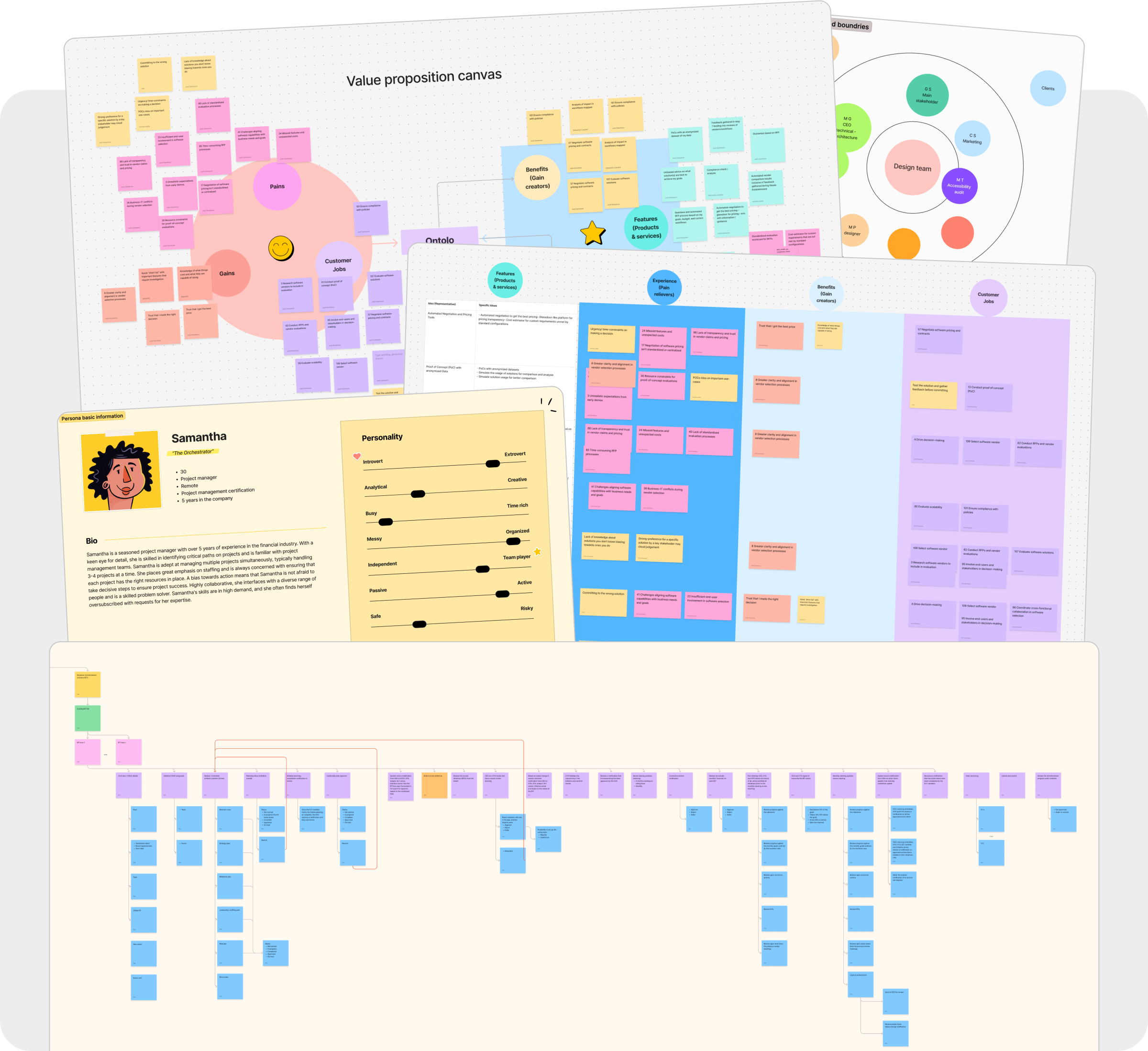
Discovery activities included kick-off sessions, stakeholder mapping, persona creation, user flow definition, and interviews. These insights shaped both the AI model assumptions and the UX direction.
Ideation & wireframes
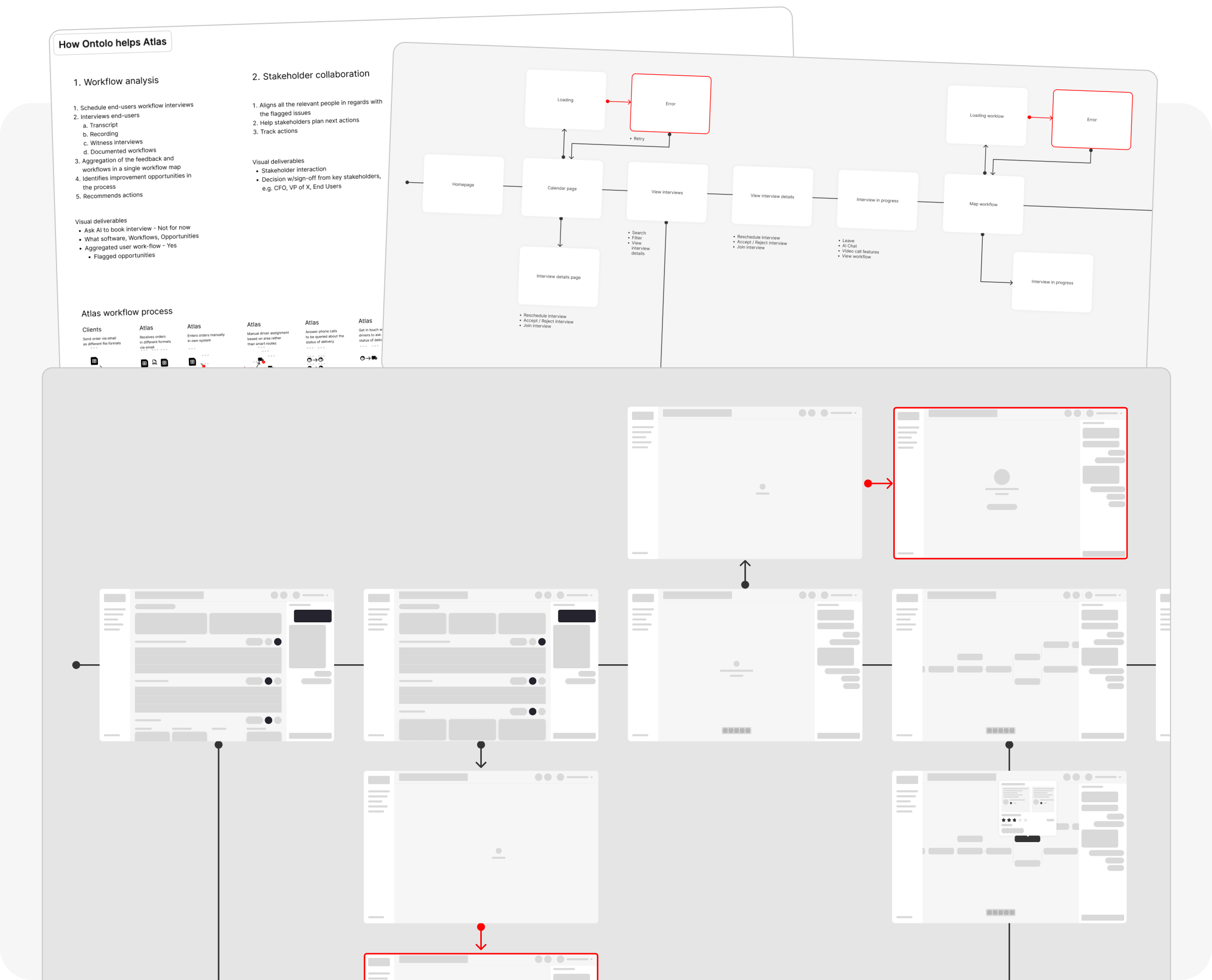
Low-fidelity wireframes were produced for the POC web app and the marketing website, enabling rapid iteration and early alignment.
Hi-fi designs & prototyping
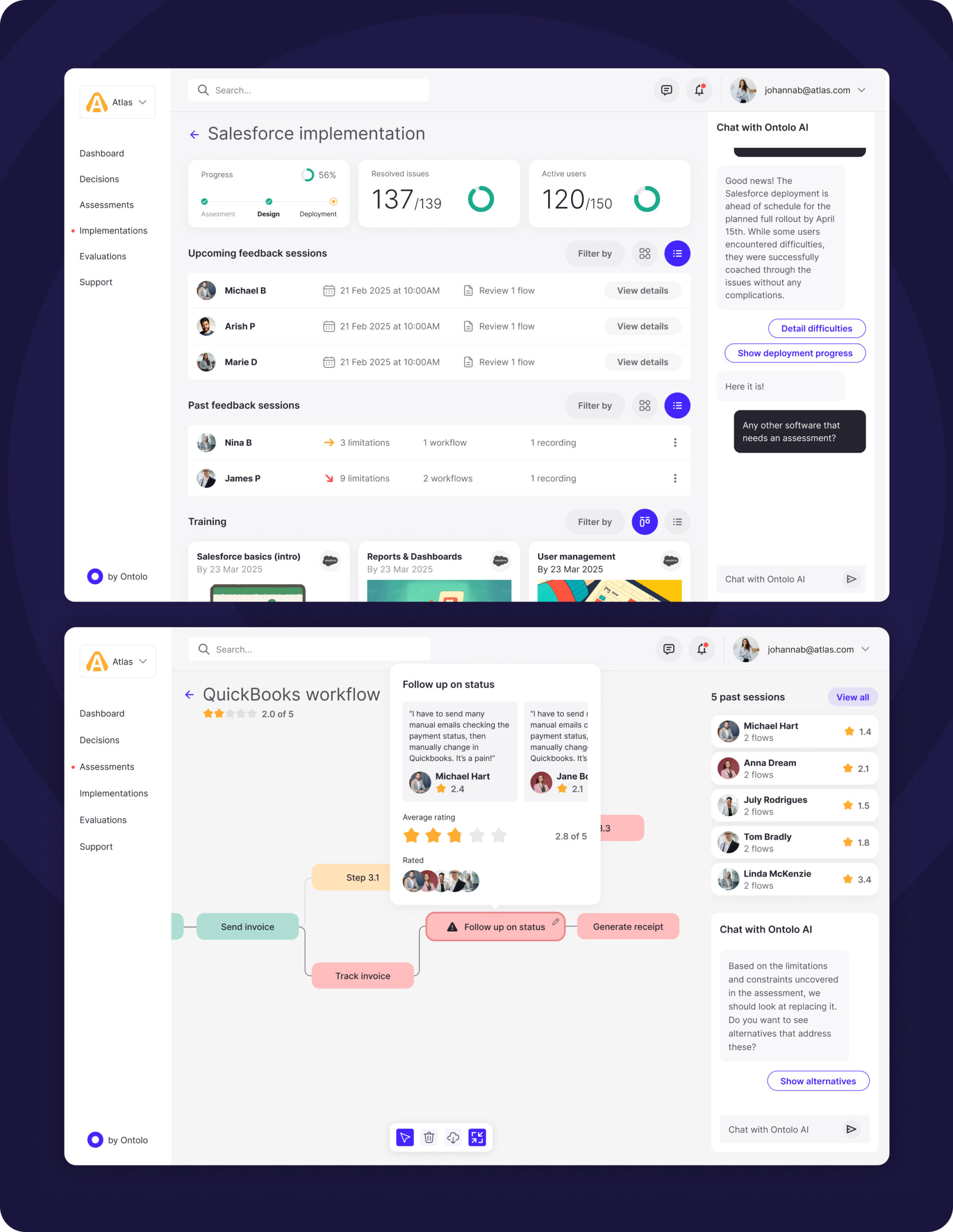
High-fidelity designs were created for both the application and marketing site, supported by custom illustrations and an interactive prototype used for internal demos and validation.
Testing
Interactive prototypes were tested with stakeholders to refine clarity, flows, and perceived value before development investment.
Accessibility
Accessibility considerations focused on readability, contrast, and reducing cognitive load for enterprise decision-makers.
Design system
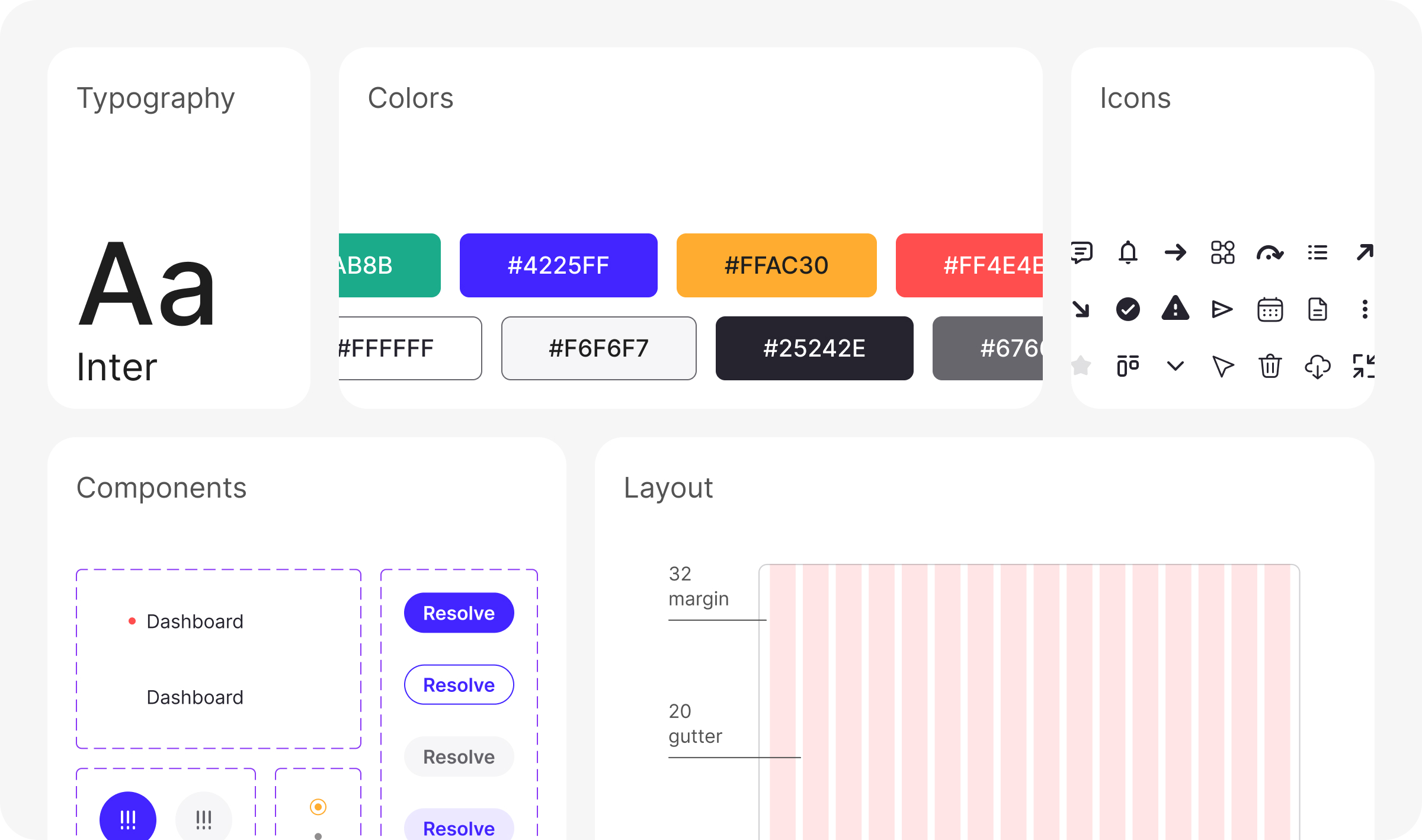
A modular design system ensured consistency across dashboards, analysis steps, and decision workflows.
Critical insights
For AI-powered enterprise software to succeed, insight alone isn’t enough. The experience must guide users step by step, turning analysis into confident action and measurable business value.
*This case study describes experience gained by team members across prior roles and engagements.